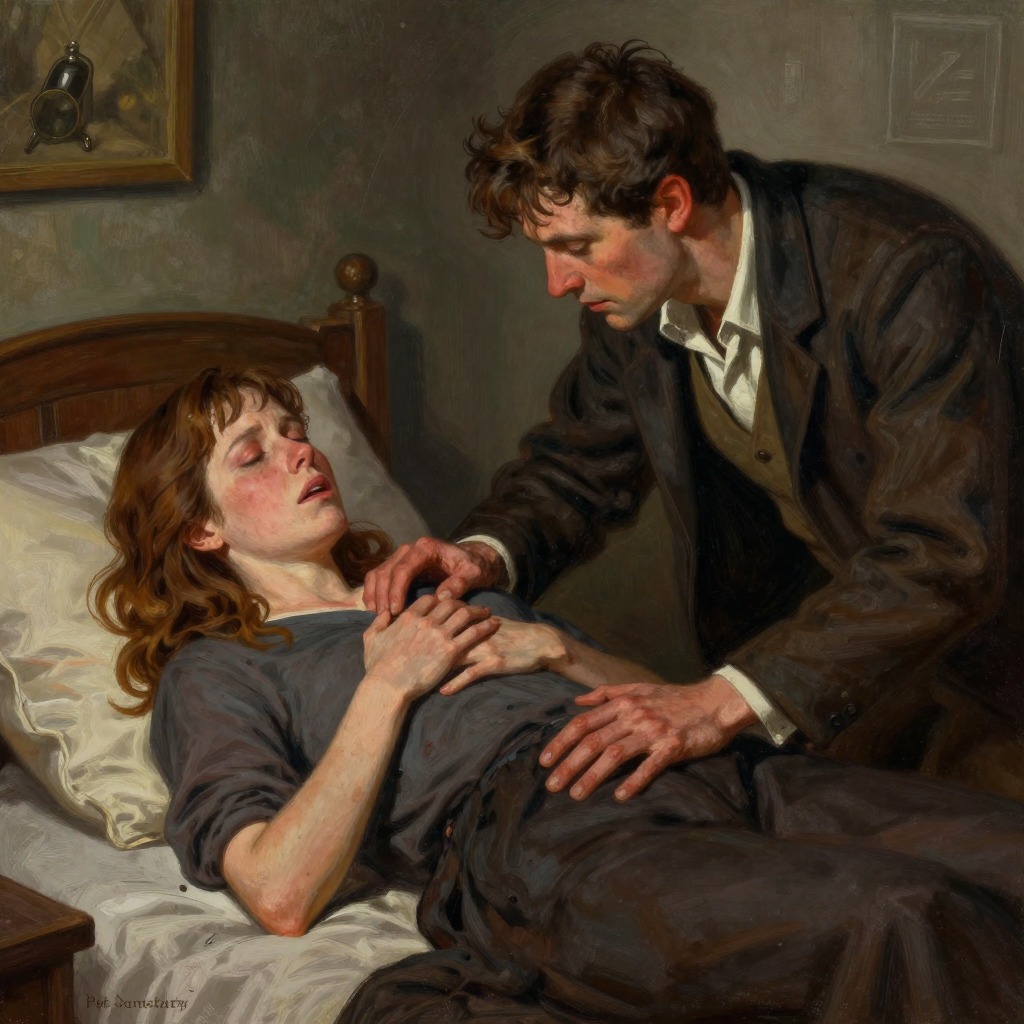
Ellie Creed
Ellie Creed, whose full name is Eileen, is the eldest child of Louis and Rachel Creed. She is five years old when the family moves from Chicago to the big white house in Ludlow, Maine, and she is the one who first names their new home, shouting "Hooray!" when she sees it. She is a bright, imaginative, and sometimes willful child, prone to prolonged giggling fits and temper tantrums, but she is also deeply loving, especially toward her cat, Winston Churchill, whom she calls Church. Her father, Louis, notes her beauty and her dark, almost Levantine complexion, and he admires her wariness about giving too much of herself away, a trait he recognizes as his own.
Life and Plot Trajectory
Ellie's life in Ludlow is marked by a series of escalating encounters with death. Her first, and most formative, is a visit to the Pet Sematary with her father and their neighbor, Jud Crandall. The sight of the crude, concentric circles of animal graves—markers for pets like Smucky the Cat and Biffer the cocker spaniel—triggers a profound existential crisis. She becomes hysterical, weeping over the possibility that Church might die, and her grief reveals a precocious understanding of mortality's reach: if Church can die, so can her parents, her baby brother Gage, and herself. This episode sparks a bitter argument between her parents, exposing Rachel's deep-seated phobia of death, rooted in the traumatic loss of her sister Zelda. Ellie's subsequent nightmares about Church being run over prove to be a premonition, and when Church is indeed killed and then mysteriously returns, changed and smelling of the grave, Ellie is the first to notice. She tells her father, "Church smells funny," and she no longer wants the cat to sleep on her bed.
Relationships and Conflict
Ellie's relationship with her father is central to her experience. She turns to him with her fears about death, and he tries to offer her comfort and honesty, though he is often at a loss. After Gage's death, Ellie clings to a Polaroid picture of herself pulling Gage on a sled, and she sits in Gage's small director's chair, vowing to keep his memory alive by eating his cereal and reading his books. She tells her father she will "pray to God for Gage to come back," citing the story of Lazarus. This desperate hope, born of a child's faith, stands in stark contrast to the grim reality Louis is about to pursue. Her relationship with her mother is strained by Rachel's own grief and her inability to confront death, which leaves Ellie emotionally isolated. She becomes increasingly sensitive, experiencing vivid, prophetic dreams. On the plane to Chicago after Gage's funeral, she has a nightmare in which a man named "Paxcow" (Victor Pascow) warns her that her father is in danger and that something terrible is going to happen. She wakes up screaming, "It's Gage! Gage is alive!"
Change and Ending
Ellie's character arc is one of forced maturation. She begins as a child who cannot bear the thought of her cat dying and ends as a child who has lost her brother, witnessed her family's disintegration, and become a vessel for psychic warnings she cannot fully understand or control. Her final act in the narrative is a desperate plea to her mother not to leave her father alone, sensing the impending doom. She is left in Chicago with her grandparents, separated from the final, catastrophic events in Ludlow. The story does not follow her further, but her fate is left ambiguous, a surviving fragment of a shattered family, carrying the trauma of what she has seen and dreamed.
Thematic Significance
Ellie serves as the story's moral and emotional barometer. Her initial, healthy grief over the Pet Sematary is the natural human response to death that the adults around her—Rachel through denial, Louis through a desperate refusal to accept—fail to model. Her childish prayer for Gage's return is a literal, innocent wish that Louis perverts into a monstrous act. Her prophetic dreams, which she cannot articulate, represent the novel's central warning against tampering with the natural order. She is the innocent who sees the truth, but whose voice is too small to stop the tragedy. Her survival is not a triumph but a haunting question mark, a reminder that the sins of the fathers are visited upon the children.